
Extranet Modernization for a Global Hospitality Organization
Replacing a Legacy WebSphere Extranet with a Modern React, .NET, Azure, Auth0, and AI-Enabled Platform
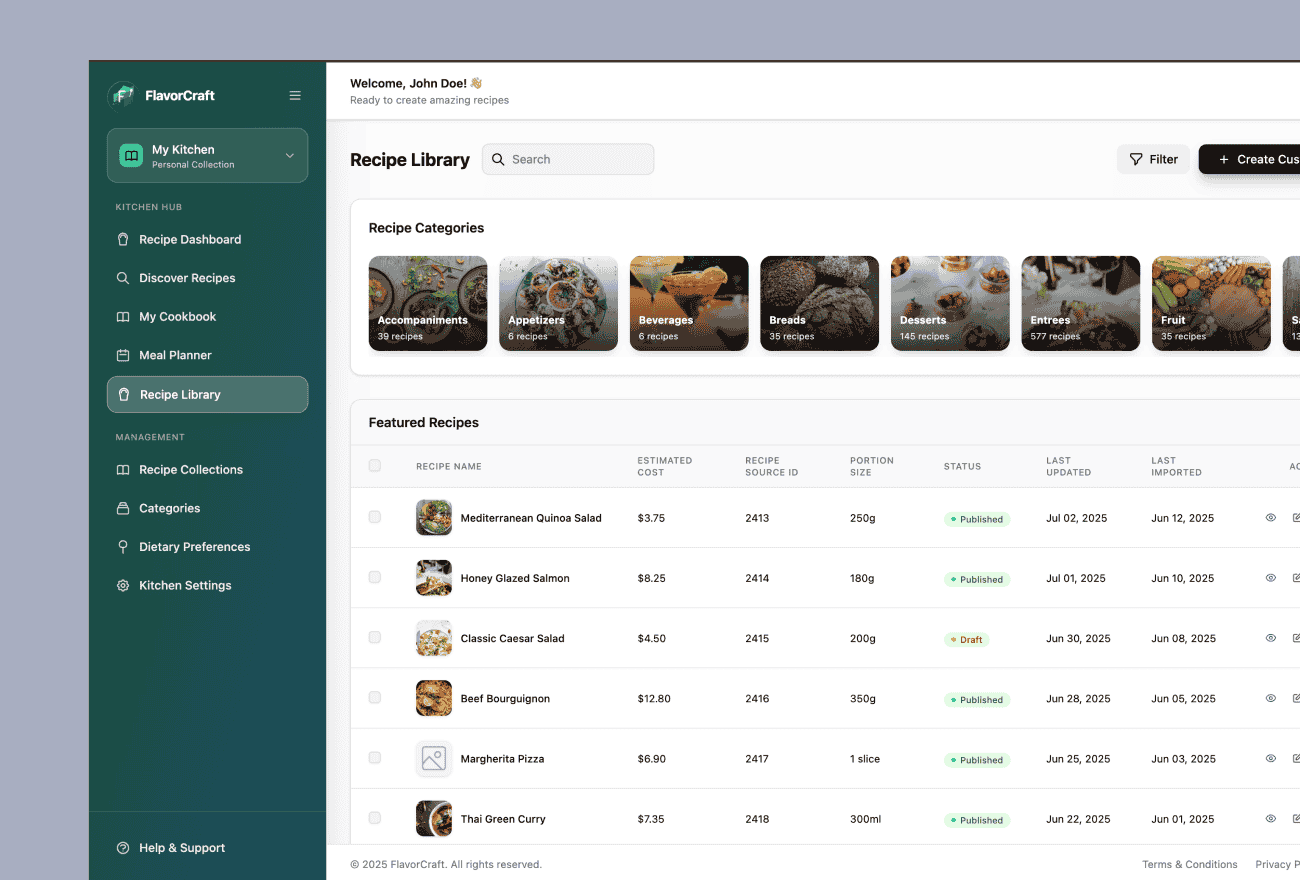
A global hospitality organization relied on a long-running extranet to provide customers and business partners with access to operational content, training, supplier information, menus, recipes, alerts, and other digital services.
The platform had accumulated years of valuable business functionality, but its legacy WebSphere architecture made it increasingly difficult to enhance. Releases required more effort, integrations were harder to implement, and introducing modern capabilities meant continuing to invest in an aging technology stack.
Stackular modernized the extranet using React, .NET, Microsoft Azure, and Auth0, replacing the legacy application with a modern cloud architecture designed for faster development, easier integration, improved usability, and continued expansion.
The modernization also created the foundation for capabilities that would have been significantly harder to implement in the legacy environment, including:
- AI-assisted French and Spanish translation
- intelligent recipe recommendations
- conversational recipe search and Q&A
- AI-assisted menu changes through a chatbot
More importantly, the organization gained a digital platform that could continue evolving instead of adding new functionality to an increasingly restrictive legacy architecture.
The Challenge
The existing extranet was a business-critical application used to deliver information and digital services to the organization's customers.
Over time, the platform had expanded to support multiple areas of the business, including:
- news and customer alerts
- learning and training content
- supplier-spend information
- documents and operational content
- menus
- recipes
- customer-facing tools
- other operational workflows
The application was built on IBM WebSphere and reflected many years of incremental development.
The problem was not that the system had stopped working.
The problem was that continuing to evolve it had become increasingly expensive and restrictive.
New features had to fit within an aging architecture. Frontend development was constrained by older technology. Integrations required more effort. The platform also made it harder to introduce cloud-native and AI-driven capabilities quickly.
The organization needed to modernize the application without disrupting the digital services its customers already depended on.
Why Modernization Instead of a Simple Redesign?
A visual redesign alone would not have addressed the underlying problem.
The limitations were architectural.
Keeping the existing backend while simply changing the appearance of the application would still leave the organization with:
- tightly coupled legacy code
- slower feature development
- difficult integrations
- higher maintenance effort
- limited cloud-native capabilities
- continued dependence on aging technology
Stackular therefore approached the initiative as an application modernization program, not simply a user-interface refresh.
The objective was to preserve valuable business capabilities while replacing the technical architecture that made those capabilities increasingly difficult to extend.
Stackular's Approach
Stackular redesigned the application around a modern web architecture using:
- React for the frontend experience
- .NET for backend APIs and application services
- Microsoft Azure for cloud infrastructure and platform services
- Auth0 for external identity, authentication, and single sign-on
The architecture separated the browser experience from business logic, integrations, identity, content, and backend services.
This created clearer boundaries between:
- user experience
- APIs
- application logic
- identity
- enterprise integrations
- content
- cloud services
Rather than rebuilding the old application screen by screen, Stackular focused on preserving the business capabilities customers depended on while replacing the technical constraints underneath them.
Modern React User Experience
The new frontend was built with React, allowing the application to be organized around reusable interface components rather than tightly coupled server-rendered pages.
This provided a foundation for:
- more consistent experiences
- reusable UI patterns
- responsive design
- easier incremental enhancement
- cleaner separation between presentation and backend logic
- faster introduction of new modules
For an extranet containing multiple business capabilities, a component-based frontend also made it easier to evolve individual areas of the platform without redesigning the entire application.
.NET Application and API Layer
The backend was modernized around .NET application services and APIs.
Instead of allowing the frontend to depend directly on legacy application internals, APIs provide defined interfaces between the user experience and underlying business capabilities.
This supports:
- centralized business logic
- enterprise integrations
- easier testing
- independent frontend and backend development
- reuse of application capabilities
- future mobile or additional digital experiences
- AI-driven workflows
The API layer became particularly important as AI capabilities were introduced.
An AI system is substantially more useful when it can work through governed APIs rather than attempting to interact with application functionality indirectly through a web interface.
Auth0 for External Identity and Single Sign-On
Auth0 was part of the modern platform from the beginning and provided the external identity foundation for the extranet.
A customer-facing portal has different identity requirements from an internal employee application.
The platform needed to support secure authentication for external users while keeping identity concerns separate from application code.
Using Auth0 provided a dedicated identity layer for:
- authentication
- single sign-on
- session management
- application access
- integration with the broader portal experience
Separating identity from individual application modules also made it easier to expand the extranet without implementing authentication independently for every feature.
Moving the Platform to Microsoft Azure
The application was deployed using Microsoft Azure, moving the extranet toward a cloud-based operating model.
Azure provided the foundation for:
- scalable application hosting
- managed infrastructure
- API-based services
- enterprise integration
- monitoring
- security
- AI capabilities
The modernization was not simply a lift-and-shift of WebSphere into another hosting environment.
The objective was to eliminate dependence on the legacy architecture and reposition the application around cloud-native services and modern application boundaries.
Modernizing a Multi-Function Extranet
One of the project's architectural challenges was that the extranet was not a single-purpose application.
It had evolved into a broader digital platform supporting several different customer-facing business functions.
The modernization therefore had to support multiple modules while maintaining a consistent architecture and user experience.
News and Alerts
The platform provides customers with relevant news, announcements, and alerts.
Modernization created a more flexible foundation for delivering timely information through the same authenticated portal customers use for operational services.
Learning and Training
Training and learning content could be delivered within the broader extranet experience.
This allowed the organization to provide educational content alongside operational tools rather than forcing users into disconnected digital experiences.
Supplier Spend
The application supports supplier-spend-related information and workflows.
This illustrates an important difference between an enterprise extranet and a public marketing website.
The platform does not simply publish content.
It participates in business processes and exposes customer-specific information.
Menus and Recipes
Menus and recipes represent another important area of the platform.
These capabilities combine:
- structured data
- content
- customer-specific business rules
- user workflows
- search
- recommendations
- AI-assisted functionality
The modern architecture allowed Stackular to introduce intelligent capabilities directly into these workflows.
AI-Assisted French and Spanish Translation
The modernized platform introduced AI-assisted translation for French and Spanish content.
Without automation, multilingual content can create a substantial publishing burden.
Each new or updated piece of content may require separate translation, review, publishing, and maintenance.
AI can accelerate that process by generating initial translations while allowing appropriate review and governance to remain in place.
The solution supported multilingual experiences while considering enterprise concerns such as:
- terminology
- brand language
- domain-specific phrases
- consistency
- human review
- content lifecycle
- updates to existing translations
The goal was not simply to translate individual words.
It was to make multilingual content more scalable as the amount of information within the extranet continued to grow.
AI-Powered Recipe Recommendations
The menu and recipe experience provided a particularly strong opportunity for AI.
When users were creating or modifying menus, they sometimes needed to replace one recipe with another appropriate option.
Traditionally, that could require manually searching through a large recipe catalog and evaluating alternatives.
Stackular introduced AI-driven functionality that could suggest similar recipes, helping users quickly identify possible substitutions when building or modifying menus.
For example, a user replacing a particular recipe could receive recommendations for alternatives with similar characteristics rather than manually searching the entire catalog.
This reduced friction in menu creation and made the underlying recipe library easier to use.
Conversational Recipe Assistant
Stackular also implemented a chatbot capable of answering questions about recipes.
Instead of forcing users to navigate through multiple search filters and recipe pages, users could ask natural-language questions about the recipe catalog.
The chatbot provided a conversational interface for discovering and understanding recipe information.
This moved the application beyond traditional keyword search toward an experience in which users could express their intent directly.
Modifying Menus Through the Chatbot
The most important AI advancement was that the chatbot was not limited to answering questions.
Users could also make changes to menus through the conversational interface.
This allowed a workflow such as:
- ask a question about an existing menu or recipe
- identify a possible substitute
- receive recommended alternative recipes
- select an appropriate replacement
- instruct the chatbot to make the change to the menu
This represents a meaningful transition from conversational AI to action-oriented AI.
The AI was no longer only retrieving information.
It could participate directly in the application workflow by invoking approved functionality on the user's behalf.
From Chatbot to Agentic Application Experience
Traditional chatbots generally answer questions.
An AI-enabled application can go further.
Because the modernized extranet exposes business capabilities through APIs and structured services, the chatbot can interact with those capabilities rather than simply generate text.
A menu-management workflow can therefore involve the AI:
- understanding the user's request
- identifying relevant recipes
- evaluating possible substitutions
- presenting recommendations
- receiving user confirmation
- invoking the appropriate application service
- modifying the menu
- presenting the updated result
That model demonstrates how agentic AI can be embedded inside an existing business application rather than operating as a separate standalone tool.
Why API-Driven Architecture Matters for AI
The AI capabilities would have been significantly harder to implement cleanly inside the legacy WebSphere architecture.
A modern API layer gives AI systems a defined set of actions they are allowed to perform.
Instead of attempting to automate a user interface, the AI can interact with specific services.
For example:
Cloud application boundaries make governed AI actions possible
- UsersExternal customersSecure access to the hospitality extranet
- IdentityAuth0Authentication and single sign-on
- ExperienceReact frontendResponsive modules and shared interaction patterns
- Application layer.NET services + APIsGoverned business capabilities and integrations
- Recipes
- Menus
- Content
- Intelligent capabilitiesAI-enabled workflows
- TranslationMultilingual content
- Recipe assistantQuestions + recommendations
- Menu actionsApproved recipe replacement
The actual APIs may differ, but the architectural principle is the same.
The AI operates through defined application capabilities.
This makes the solution easier to:
- secure
- test
- validate
- audit
- evolve
- reuse
Key Technical Decisions
Why Replace WebSphere Instead of Continuing to Upgrade It?
Legacy platforms often remain technically functional long after they stop being economically efficient.
The relevant question is not merely:
Can the old platform still run?
The better question is:
What does continuing to build on the old platform cost compared with moving to an architecture designed for what the organization needs next?
In this case, modernization allowed the organization to stop accumulating new functionality inside an increasingly restrictive architecture.
Why React?
React provides a mature component model for building complex web applications.
For an extranet containing multiple modules, reusable components make it easier to maintain consistency while still allowing each part of the application to evolve.
React also separates the frontend from server-side implementation details.
Why .NET?
.NET provides a strong platform for enterprise APIs, integrations, business logic, security, and cloud deployment.
Using .NET allowed business capabilities to be exposed through services that could support the React frontend, integrations, automation, and AI.
Why Azure?
Azure provided cloud infrastructure and platform capabilities that could support modern hosting, integration, monitoring, security, and AI-related functionality.
The larger benefit was architectural flexibility.
New services could be incorporated without redesigning the entire application platform.
Why Auth0?
External portals require identity capabilities that are secure, reusable, and independent from individual application modules.
Auth0 provided a centralized external identity layer that allowed the application to handle authentication and single sign-on without embedding identity logic throughout the application.
Why Use AI for Recipe Recommendations?
Recipe substitution is a good fit for AI because the problem is not simply retrieving an exact record.
Users often want:
something similar to this recipe
That requires evaluating characteristics and relevance rather than performing a strict database lookup.
AI can help narrow the choice while leaving the user in control of the final decision.
Why Let the Chatbot Modify Menus?
Answering questions improves access to information.
Allowing the AI to perform approved actions improves productivity.
Once the user has identified the change they want to make, requiring them to leave the conversation, locate the appropriate menu, navigate to the correct screen, find the recipe, and perform the same operation manually adds unnecessary friction.
The conversational interface can bridge the gap between intent and application action.
Modernization as a Business Investment
Application modernization can be difficult to justify when the legacy system technically still works.
The economic case becomes clearer when the organization considers:
- maintenance effort
- development velocity
- integration complexity
- release overhead
- user productivity
- technology obsolescence
- ability to introduce new capabilities
For this project, the modernization generated an estimated ROI of approximately 200%.
That figure is presented as an overall project estimate rather than being tied to a specific published measurement period.
The value came from more than replacing old technology.
The modernization created a platform capable of supporting continued digital investment without forcing each new feature to overcome the limitations of the legacy architecture.
Delivering the Initial Modernization in Approximately Three Months
The initial modernization was completed in approximately three months.
Rather than turning modernization into an open-ended multi-year rewrite, Stackular established the modern architecture quickly and created a foundation that could continue evolving incrementally.
This approach reduced a common modernization risk:
spending years building the replacement while the legacy application continues changing underneath it.
Business Results
Approximately 200% Estimated ROI
The modernization produced an estimated return on investment of approximately 200%.
Initial Modernization Delivered in Approximately Three Months
The organization moved to the new architectural foundation on an accelerated timeline rather than undertaking a prolonged multi-year replacement effort.
Modern Cloud Architecture
The organization moved away from a WebSphere-based legacy application toward a React, .NET, Azure, and Auth0 architecture.
Faster Path to New Capabilities
The new architecture made it easier to introduce functionality without extending the limitations of the legacy platform.
AI-Assisted Multilingual Content
French and Spanish translation became more scalable through AI-assisted content processes.
Intelligent Recipe Recommendations
Users can receive suggestions for similar recipes when replacing items during menu creation and maintenance.
Conversational Recipe Discovery
Users can ask natural-language questions about recipes instead of depending exclusively on traditional navigation and search.
Menu Changes Through Conversational AI
The chatbot can participate directly in menu-management workflows, allowing users to make approved menu changes through conversation.
Foundation for Agentic AI
The API-based architecture allows AI to interact with governed application functions rather than being limited to generating text.
Improved Maintainability
Separation between frontend, backend, identity, integrations, and cloud services makes the application easier to understand, test, and enhance.
Incremental Evolution
The organization gained a platform that can continue evolving as requirements change without requiring another wholesale rewrite.
Technologies Used
Lessons for Organizations Modernizing Legacy Extranets
Don't Wait for the Legacy Platform to Fail
The best time to modernize is often while the existing platform still works.
Waiting until the technology becomes unstable or unsupported turns modernization into an emergency rather than a strategic investment.
Don't Rebuild the Old Architecture in New Technology
Changing programming languages while preserving all of the original coupling simply creates a newer legacy application.
Modernization should improve architectural boundaries.
Separate Identity from Application Logic
External identity should be treated as a shared platform capability.
Keeping authentication and SSO separate from individual application modules reduces duplication and makes the broader digital ecosystem easier to manage.
Design APIs for Humans, Integrations, and AI
APIs are not only a technical integration mechanism.
They create reusable business capabilities that can support:
- web applications
- mobile applications
- partner integrations
- automation
- AI agents
Modernization Creates the Opportunity for AI
Legacy architecture can be one of the largest barriers to meaningful enterprise AI.
AI becomes easier to integrate when:
- business data is structured
- capabilities are exposed through APIs
- identity is centralized
- application boundaries are clear
- cloud services are available
Use AI Where Users Express Intent
Recipe substitution demonstrates a useful AI pattern.
Users often know what they want to accomplish but not the exact record they need.
AI can translate that intent into recommendations and actions.
Move Beyond Chatbots That Only Answer Questions
The larger value of conversational AI comes when the system can perform approved actions.
A chatbot that answers recipe questions is useful.
A chatbot that can answer the question, recommend a replacement, and update the menu creates significantly more operational value.
Keep Humans in Control of Business Decisions
AI recommendations should not necessarily become automatic decisions.
In workflows such as recipe selection and menu management, AI can reduce search and navigation effort while the user remains responsible for confirming the final choice.
Frequently Asked Questions
What is legacy application modernization?
Legacy application modernization is the process of improving an existing application's architecture, technology, infrastructure, and operating model while preserving business capabilities that still provide value.
It can include replacing legacy frontend technologies, creating APIs, moving to cloud infrastructure, separating services, improving identity, and redesigning selected workflows.
Should an organization rewrite or replace a WebSphere application?
The answer depends on the amount of valuable custom business logic within the application.
If the application contains differentiated workflows and integrations, modernization may allow the organization to preserve those capabilities while replacing the aging architecture.
If most functionality is already available in a modern SaaS platform, replacement may be more economical.
Can React and .NET be used to modernize a WebSphere application?
Yes.
React can provide a modern component-based frontend while .NET APIs and services replace legacy business and integration layers incrementally.
This allows the old application to be decomposed over time rather than requiring every capability to be replaced simultaneously.
Why use Auth0 for an external customer portal?
Auth0 provides a dedicated identity layer for customer-facing applications.
It can support authentication, SSO, sessions, federation, and other identity capabilities without requiring each application module to implement those concerns independently.
Can AI be used to translate enterprise content?
Yes.
AI can significantly accelerate translation for frequently changing enterprise content.
Organizations should still consider terminology, accuracy, branding, human review, security, and publishing governance.
Can AI recommend similar recipes?
Yes.
Recommendation systems can use recipe information and contextual signals to identify alternatives that are similar or appropriate for a particular use case.
AI is particularly useful when the user's request is conceptual—such as finding something similar—rather than an exact keyword lookup.
Can a chatbot make changes inside an enterprise application?
Yes, when the application exposes approved business capabilities through secure APIs.
The chatbot can interpret a user's intent and invoke specific actions on the user's behalf.
Authentication, authorization, validation, auditability, and user confirmation become especially important when AI is allowed to modify business data.
What is agentic AI in an enterprise application?
Agentic AI refers to AI that can perform sequences of actions rather than merely generate text.
For example, an AI assistant could:
- understand a request
- find relevant recipes
- recommend alternatives
- retrieve a menu
- receive user confirmation
- replace a recipe
- save the updated menu
The AI is participating in a workflow instead of only answering a question.
Why does application modernization make AI easier?
AI works best when the applications around it have clear interfaces.
A modern API-driven architecture gives AI controlled ways to retrieve information and perform actions.
Legacy applications often hide business capabilities inside tightly coupled user-interface logic, making secure automation much harder.
How long does application modernization take?
Timelines vary based on application size, complexity, integrations, risk, and migration strategy.
Incremental approaches can begin delivering value much sooner than complete multi-year rewrites.
For this implementation, Stackular delivered the initial modernization in approximately three months.
How should application-modernization ROI be measured?
Organizations should consider more than infrastructure savings.
Value can come from:
- reduced maintenance effort
- faster feature delivery
- lower integration costs
- improved user productivity
- reduced manual work
- lower technology risk
- faster introduction of AI
- new business capabilities
For this project, the estimated ROI was approximately 200%.
Related Services
Related Case Studies
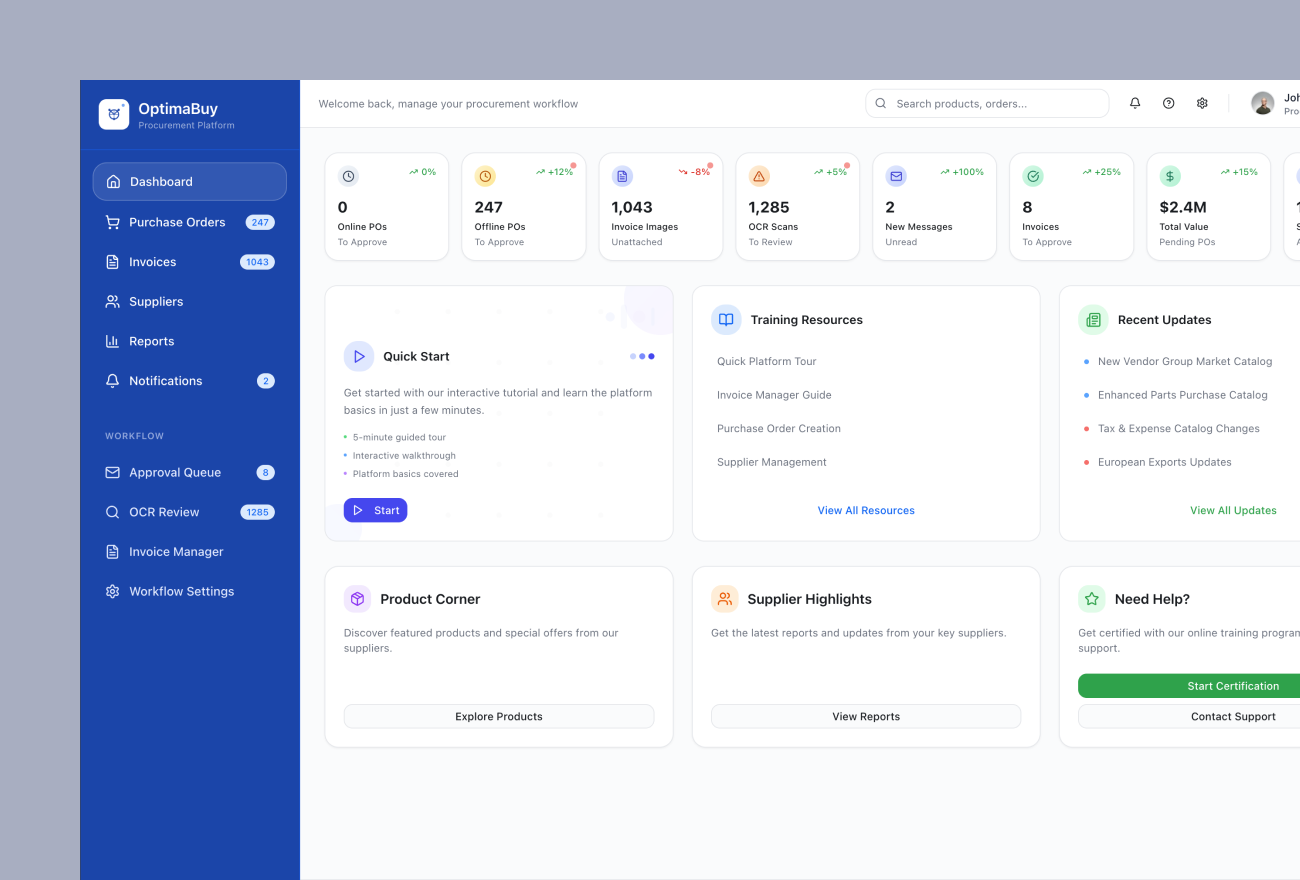
Procure-to-Pay Application Modernization for a Global Hospitality Organization
A global hospitality organization relied on a long-running procure-to-pay platform supporting purchasing, purchase orders, invoicing, receiving, financial workflows, supplier interactions, and customer-facing business processes.

Customer Reporting Modernization for a Global Hospitality Organization
A global hospitality organization provided customer-facing analytics as part of a broader procure-to-pay platform used to support purchasing, invoicing, supplier management, receiving, and other procurement activities.